A workable local repair
Damage confined to an area with sound adjoining roofing may be repaired by replacing the affected material and restoring the overlaps and flashing connections. The scope needs enough access to make those connections properly.
Missing shingles, a new leak or concern after hail deserves a look at the property itself. Request a free storm-related roof inspection in Keller.
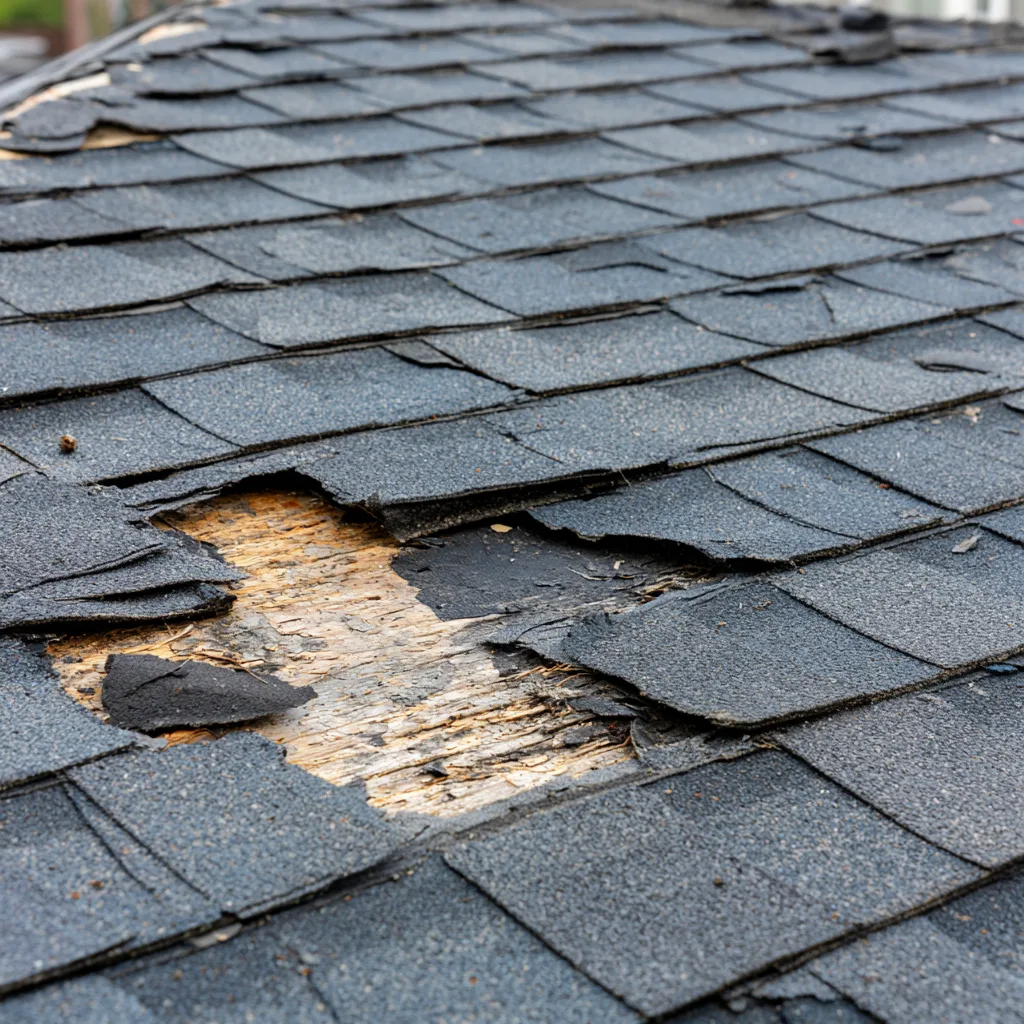
Wind can lift or remove shingles and expose the layers beneath them. Hail can damage a covering or a vulnerable detail, but marks on a roof are not all the same kind of damage. The material, the condition around the mark and the roof’s ability to shed water all matter.
An inspection after weather should explain what is found on your roof. It should not turn every older shingle into storm damage or treat a nearby hail report as proof that the entire covering needs replacement.
Missing or lifted shingles can leave an opening that needs attention.
Roof edges, flashings and penetrations can be affected alongside the main covering.
Wear and earlier repairs can change both the findings and the work a new repair must connect to.
Hail reports give a date and a reported location. An inspection looks at what happened to your roof: displaced shingles, damaged flashing and impact marks in the covering. Property history and storm evidence help explain the timing of the damage.
If you noticed a leak or a change after a storm, tell us when it happened. If you’re unsure of the date, you can still request a free inspection.

Tell us if water is entering now. Temporary weather protection may be appropriate before a permanent repair can be completed, depending on safe access, weather and the roof condition. It serves a different purpose from restoring the damaged detail.
Stay off the roof and keep clear of sagging ceilings or water near electrical fittings. Seek emergency help if there is immediate danger. Tell us what you’ve noticed from a safe place; roof access is part of the roofing work.
Mention where the leak is affecting the property.
Do not climb onto the roof or enter an unsafe area.
Protection now does not establish the final repair scope.
Damage confined to an area with sound adjoining roofing may be repaired by replacing the affected material and restoring the overlaps and flashing connections. The scope needs enough access to make those connections properly.
When damage or deterioration reaches connected slopes, or neighboring material cannot be lifted without breaking, a larger repair or replacement may make more sense. The reason should be tied to the roof, not a preset age or a promised insurance outcome.
We examine the damaged roofing and explain the repair or replacement options. The physical work depends on the covering, flashing and material around the damaged area.
Your insurer decides what the policy covers. The deductible and payment terms affect what you pay toward covered work. Our roof insurance guide explains those terms alongside the roofing decision.
No. The condition on the property needs to be assessed. A report describes a reported event, not the result on your roof.
A temporary cover or patch is intended to limit exposure while conditions and work are resolved. A durable repair needs suitable material, preparation and proper connections to the roof.
You can still request an inspection if you have a roofing concern after weather. You do not need to climb onto the roof to decide whether the request is justified.
That depends on the cause of damage and the policy. Wear alone does not establish coverage, and a roofing inspection is not the insurer’s decision.
Share what changed after the weather and whether water is entering now. Start with a free inspection of the roof on your property.